


If you support iPhones in your organization, contact access becomes an issue faster than you expect.
Employee details live in Active Directory, yet they rarely appear where people actually need them. Users search Outlook, save contacts by hand, and end up with outdated entries.
Trying to sync Active Directory contacts to iPhone devices sounds simple, but iOS does not connect to directory data by default.
This guide breaks down the real options and what works long term.
Why Active Directory Doesn’t Sync to iPhone
Active Directory was never designed to feed contact data directly into mobile devices. It acts as a directory for identity, authentication, and internal services, not as a contact source for phone apps.
Even in cloud environments using Microsoft Entra ID, the role stays the same. The directory supports email, access control, and directory lookups, but it does not push data to iOS.
On iPhones, the native Contacts app expects data from specific account types like iCloud, Google, or local device storage. It does not know how to read directory data from Active Directory or Entra ID.
Exchange fills part of that gap by exposing the Global Address List, which Outlook can search, but that access stops inside the app.
How to Sync AD Contacts to iPhone
Method 1: Manual Outlook Lookup and Save
On iPhones, the most common way people access Active Directory contacts is to look them up in Outlook and save them manually on their device. There’s no automatic connection between the directory and the iOS Contacts app, so users handle it themselves.
Active Directory, or Microsoft Entra ID in cloud-only setups, serves as the underlying directory Exchange relies on to build the Global Address List. This directory data supports email and internal lookups, but it does not feed directly into the iPhone’s native contacts.
The Global Address List sits above that directory layer. In Exchange or Microsoft 365 environments, Exchange pulls user and contact information from the directory and exposes it through the GAL.
Outlook connects to Exchange and uses that GAL for searches. When someone searches for a coworker in Outlook, they are not querying the directory itself. They are browsing the GAL generated from that directory data.
In practical terms, the flow looks like this:
Directory (Active Directory or Entra ID) → Exchange → Global Address List → Outlook
The iPhone is not part of this flow by default. Users open Outlook on their device, locate a contact in the GAL, and then manually add it to the iOS Contacts app. Outlook has access to the directory. The native Contacts app does not.
Eventually, this method places the entire responsibility for saving and maintaining contact information on the employee.
Here are the typical steps they will follow:
1. Open Outlook or another email app connected to the company directory.
2. Search for a coworker or external contact in the directory and open the contact details.
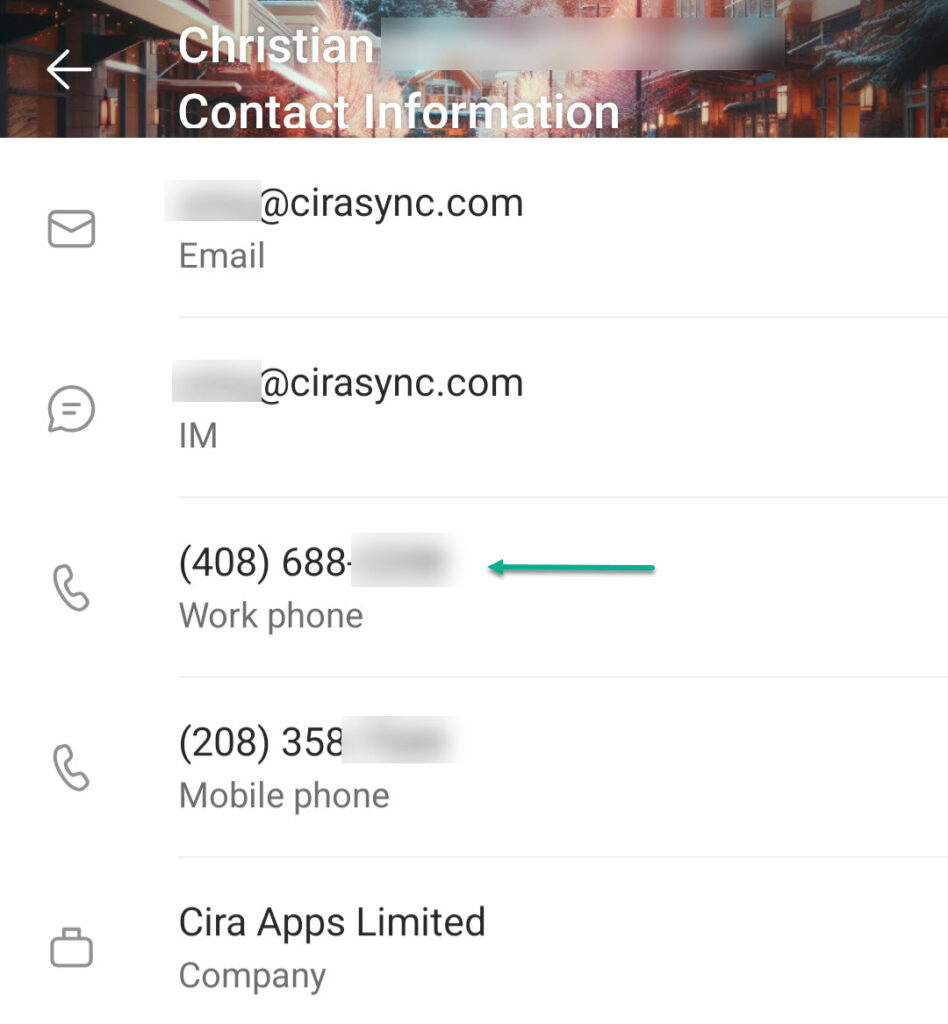
3. Manually copy the phone number and save it in the Contacts app on your iPhone.
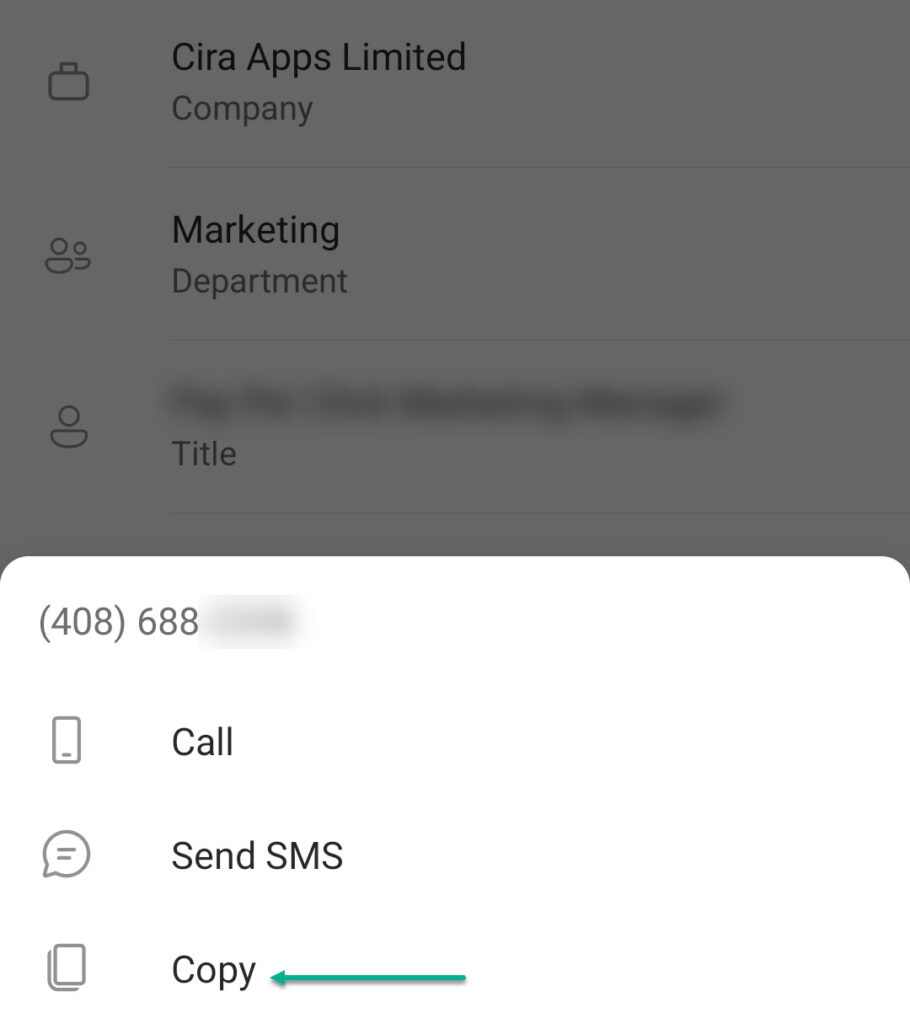
4. Repeat the process for each contact they need.
This approach helps in the moment because users can quickly grab the contact they need. But there’s no consistency. One person saves only a phone number. Another adds an email or a title. Everyone handles it their own way.
As time passes, those saved contacts become inaccurate. People save the same coworker more than once, which leads to duplicates. Contacts for employees who have left the company often stay on phones long after they should be removed.
Teams fall back on this Outlook-based lookup when no real sync is in place or when mobile access does not feel critical. It might hold together for a very small group, but it breaks down fast as the team grows.
Let’s see another way to sync AD to iPhone devices.
Method 2: Exporting Active Directory Contacts
With this approach, IT takes ownership of the process instead of leaving it to individual users, but the workflow remains largely manual.
Rather than having employees save contacts one at a time, IT exports contact information from Active Directory or Microsoft Entra ID into a file. That file is then shared through email, a shared drive, or an internal portal.
Here is how to export Active Directory contacts.
- Open Active Directory Users and Computers on a domain controller or admin workstation.
- Navigate to the OU that contains users or contact objects.
- Use a PowerShell command, such as Get-ADUser or Get-ADObject, to pull contact attributes like name, phone number, email, and title.
- Export the results to a CSV file using Export-Csv.
- Review the CSV in Excel to remove unused columns or fix formatting issues.
For Entra ID (Formerly Azure AD), the flow looks slightly different:
- Sign in to the Microsoft Entra admin center.
- Go to Users or Contacts.
- Use the export option or Graph-based scripts to download user data as a CSV.
From there, users download the CSV and manually import it into the iPhone Contacts app. Each user completes the import on their own device, using Apple’s contact import options.
The core problems don’t change. The exported file represents a single moment in time, not a live connection. Users import contacts in different ways, and any update requires exporting and distributing a new file. Over time, this turns into repeated upkeep instead of a reliable sync.
Let’s look at another way to sync Active Directory contacts to iPhone devices.
Method 3: Use a Dedicated Active Directory Contact Sync Tool
This method relies on a dedicated directory sync solution that connects straight to Active Directory or Microsoft 365 and delivers contacts to iPhones automatically.
IT configures the tool once, and after that, users don’t need to take any action.
When compared to manual saves, CSV exports, or Outlook-based workarounds, this approach removes friction from the process altogether.
- Contacts remain consistent across iPhones without user involvement.
- Changes sync automatically instead of depending on reminders or repeat imports.
- IT controls which contacts sync to which users and when updates occur, instead of dealing with individual issues.
Over time, this leads to fewer duplicates, fewer outdated contacts, and far fewer mobile contact-related support tickets.
This is exactly where CiraSync comes into play.
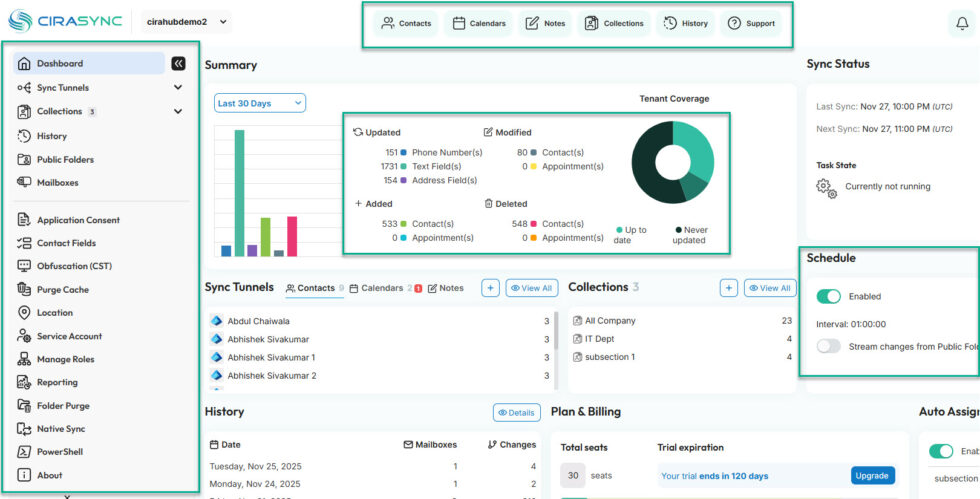
CiraSync allows you to sync Microsoft 365 contacts directly to Intune-managed iOS devices.
Inside CiraSync, admins connect the directory, decide which users or groups receive specific contacts, and set how often syncing runs. Contacts then show up on iPhones automatically, without users searching for entries, copying details, or saving anything by hand.
When contact details change in Active Directory, such as a phone number or job title, CiraSync reflects those updates on the assigned devices according to the configured sync schedule.
Check out our FAQ to learn more about CiraSync, and read this guide to understand its security and compliance.
Let’s now see how to sync Active Directory contacts to iPhones using CiraSync.
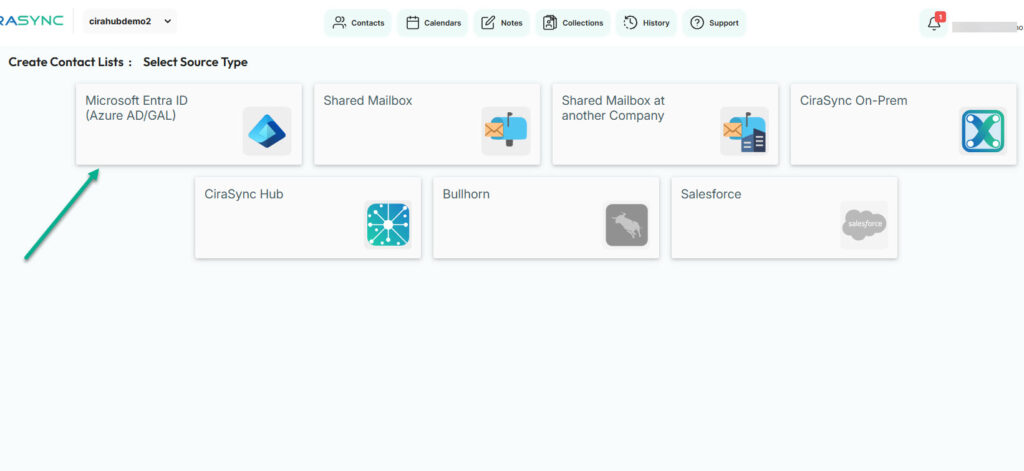
1. Click Contacts at the top > Add List.
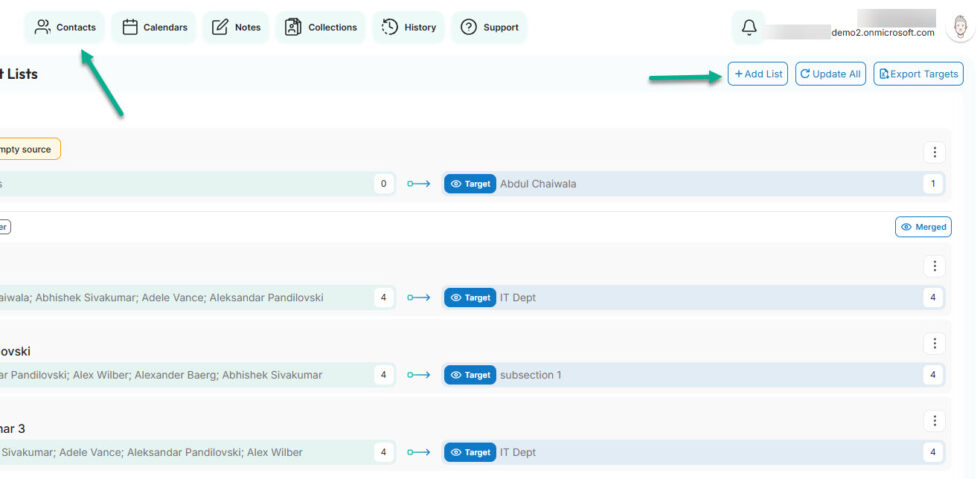
2. Choose the source. It can be Shared Mailboxes, Salesforce, and more. We will go with Microsoft Entra ID for this tutorial.
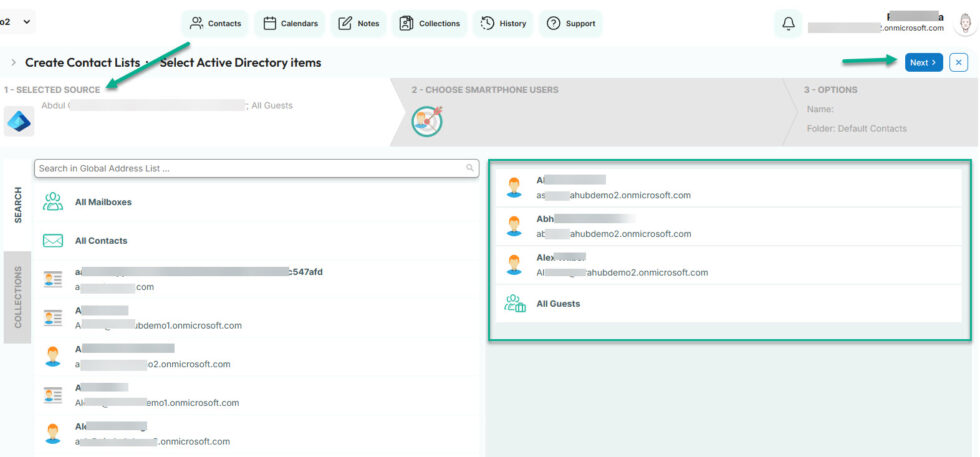
Now, select the contact lists you want to sync. You can sync one or more employees or the entire contact list. Click Next.
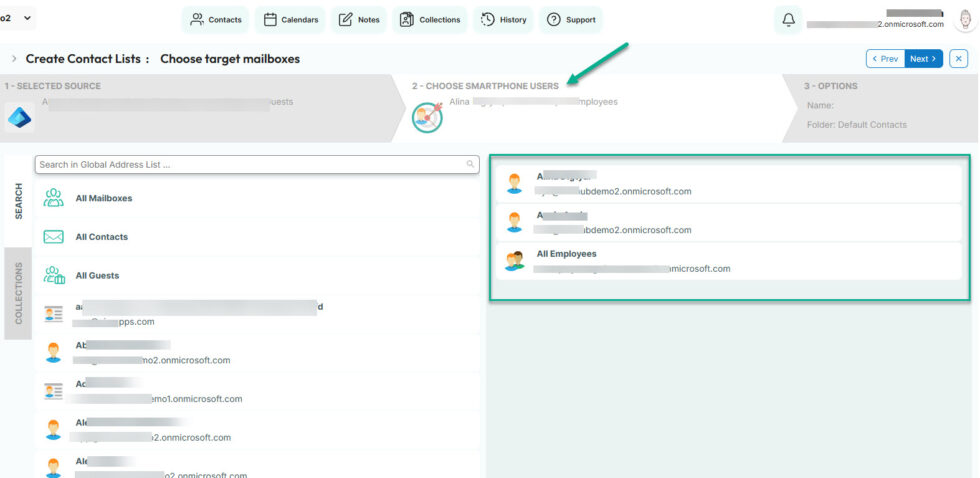
3. Let’s choose the smartphone users. These are the people you want to sync the contacts to. It could be leaders in your organization, a specific department, or all employees.
In my case, we will sync to all employees.
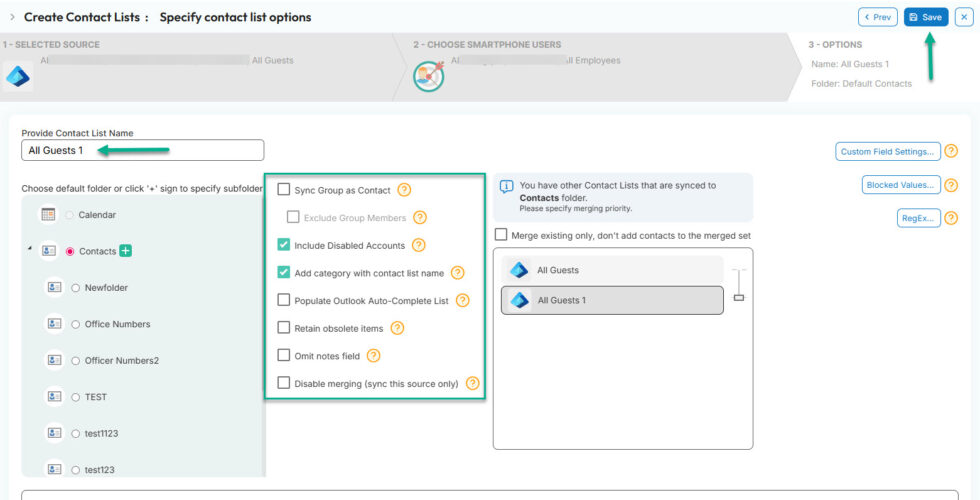
4. Now, let’s ask CiraSync to work like we want.
For instance, the AD sync tool will not sync disabled accounts. This means that if you disable accounts in the Entra ID (Azure AD/GAL), CiraSync will not sync them to the iPhones.
However, you can decide to sync them by checking the “Include Disabled Accounts” box.
Using other advanced settings, admins can also retain obsolete items, omit note fields, or disable merging.
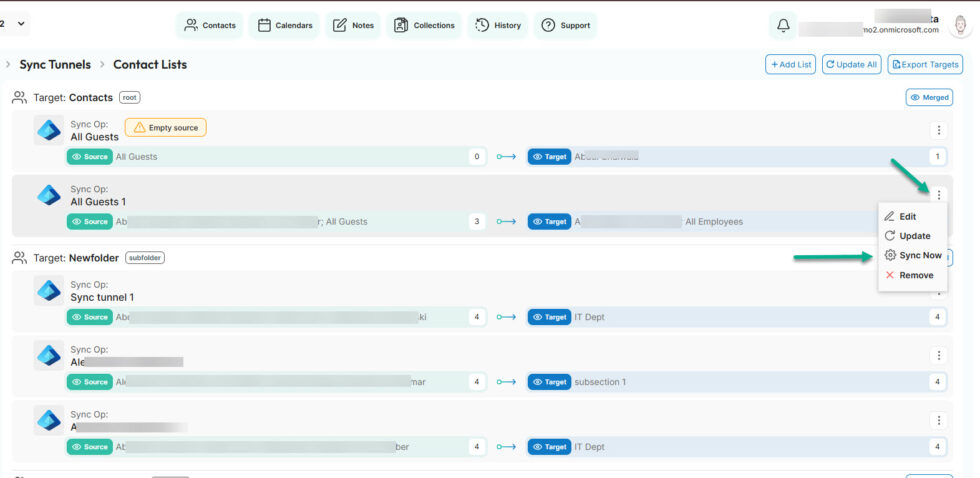
CiraSync will now redirect you to Sync Tunnels, where you’ll see a sync preview. Press Sync Now.
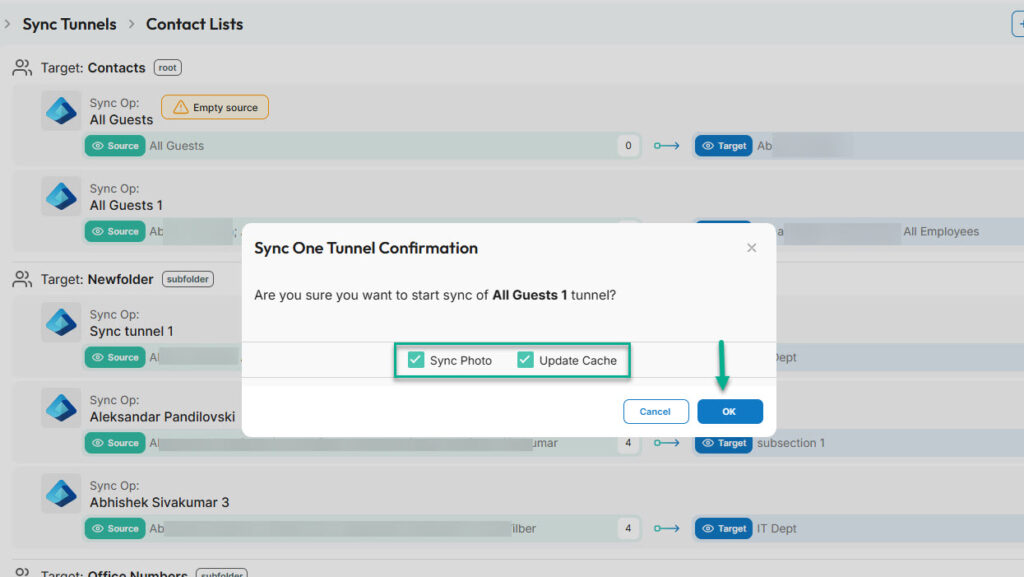
5. Finally, check Update Cache and Sync Photo (if you want to sync profile pictures as well), and click OK.
And voilà, you just synced Active Directory contacts to iPhones using CiraSync.
Oh, one more tip: Go to the main dashboard and choose your syncing schedule.
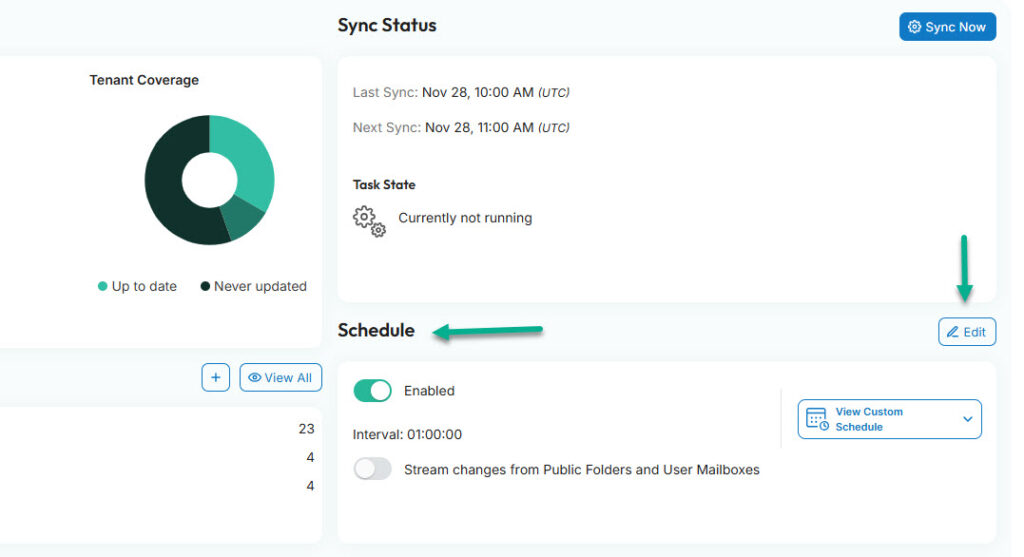
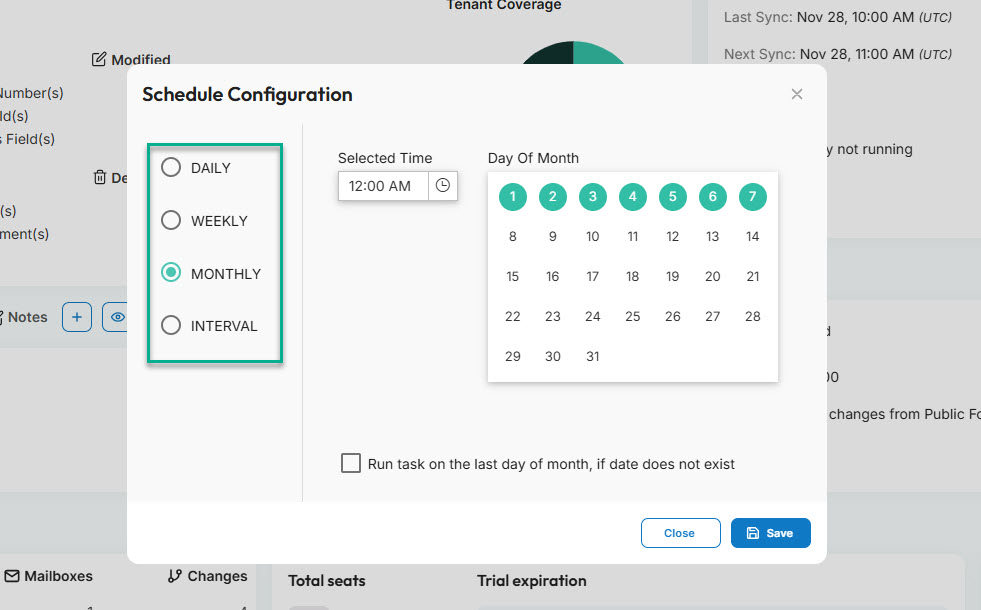
It can be:
- Daily — Once per day (e.g., 09:00 AM)
- Weekly — Select the days (e.g., Monday, Wednesday, and Friday at 09:00 AM)
- Monthly — Select the days of the month (e.g., 6th, 10th, and 18th at 10:00 AM)
- Interval — Choose a time interval (e.g., every one hour)
Sync AD Contacts to iPhones
Syncing Active Directory contacts to iPhones should be treated as core infrastructure, not a quick convenience.
Temporary solutions like manual saving, file exports, or Outlook-based lookups can help in the short term, but they quickly lead to inconsistencies and repeated support issues.
A proper sync approach removes uncertainty, lightens the load for IT teams, and keeps contact information accurate as the organization scales. In the long run, that dependability saves far more time than any workaround.
FAQ
No. iPhones do not connect directly to Active Directory or Microsoft Entra ID. A bridge is required to make directory contacts available on iOS devices.
Why can I find coworkers in Outlook but not in the iPhone Contacts app?
Outlook searches the Global Address List through Exchange. The iOS Contacts app cannot read the GAL or directory data on its own.
Is the Global Address List the same as Active Directory?
No. Active Directory or Entra ID stores the data. Exchange uses that data to build the Global Address List that Outlook searches.
Can Outlook automatically sync GAL contacts to an iPhone?
No. Outlook treats GAL entries as directory profiles, not device contacts, so they do not automatically appear in the iOS Contacts app.
Does exporting contacts from Active Directory create a real sync?
No. Exporting contacts creates a static file. Any update requires a new export and manual reimport, which often causes inconsistencies.
What is the most reliable way to sync Active Directory contacts to iPhones?
A dedicated directory sync solution, such as CiraSync, that runs automatically and is centrally managed by IT delivers the most consistent results.